We protect your funds, freedom, and security.
Convenience
and quality for your peace of mind
We work only with verified, “clean” crypto
Guaranteed
anonymity
We ensure complete privacy — protecting your identity and masking all transaction traces
Protection
from restrictions
We never hold your funds or impose hidden limits
About us
SecretExchange — It’s more than just a crypto exchange — we’re building a space where every user can exchange cryptocurrency safely and anonymously, without borders or limitations.
Our platform combines speed, reliability, and complete privacy. We don’t require verification, block client funds, or share your data with third parties. All you need is a fair and fast exchange at a real market rate.
Why Choose SecretExchange
- Instant exchanges of popular cryptocurrencies
- Complete anonymity and data protection
- Favorable rates with no hidden fees
- Access from anywhere in the world
- Trusted reputation among traders and investors
We don’t collect personal data — we respect your privacy.
SecretExchange - is where honest and secure crypto exchange begins. Fast. Free. Anonymous.
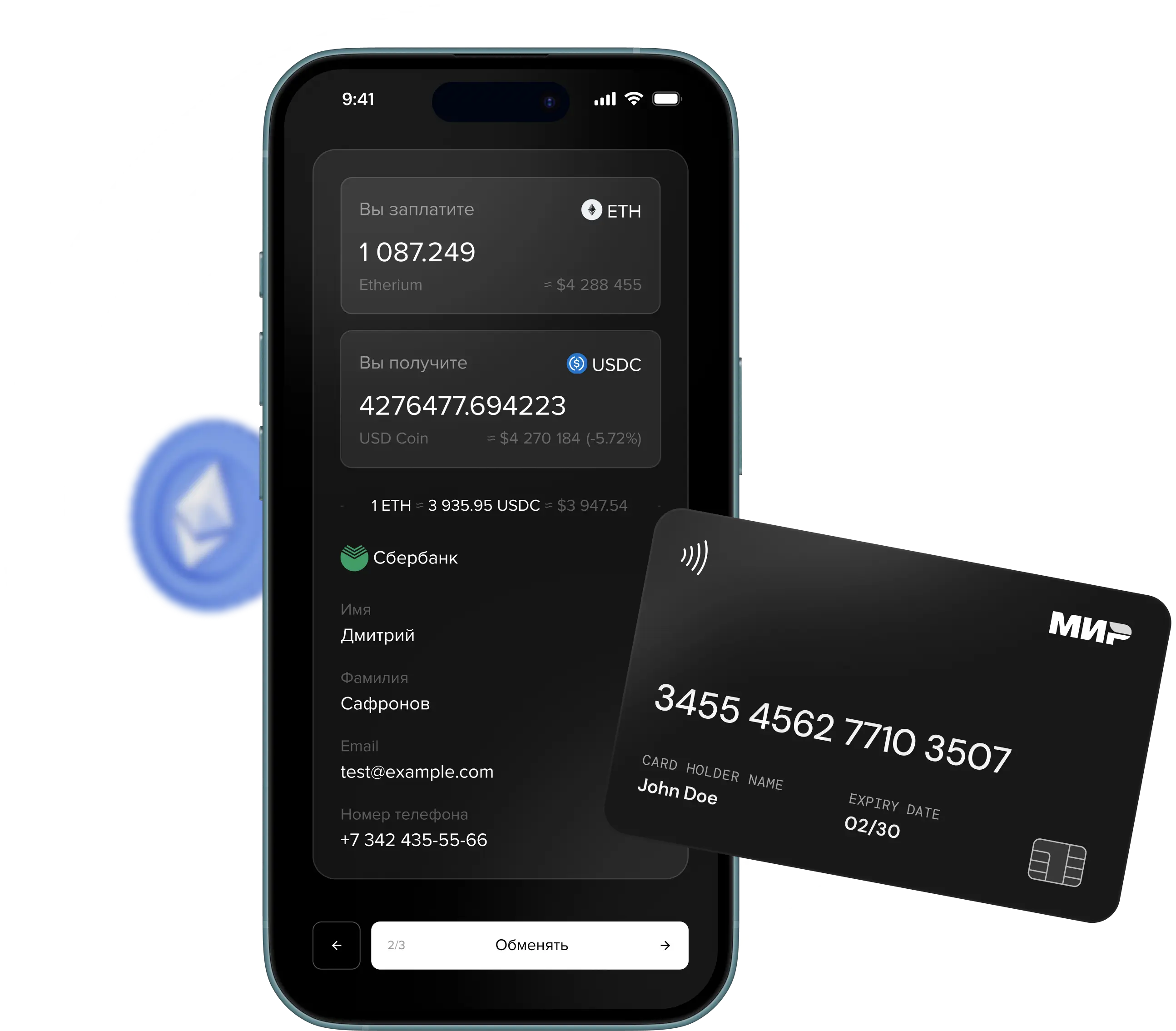

Cryptocurrency exchanger: fast exchange of digital assets at a favorable exchange rate
The cryptocurrency world has opened up unprecedented possibilities of financial freedom for mankind. Bitcoin, ethereum, stablecoins and hundreds of other digital assets have changed the idea of how money should work. Decentralization, transparency, speed of transactions, absence of intermediaries - these principles formed the basis of a new financial system, where everyone becomes their own bank.
But along with opportunities came challenges. How to quickly exchange one cryptocurrency for another? Where to find an honest exchange rate without hidden markups? How to avoid lengthy registration procedures and document verification? How to protect your privacy in the era of total financial control?
A modern crypto exchanger is designed to solve these problems elegantly and efficiently. It is not just a technical tool for converting assets - it is a philosophy of financial independence, where the user gets full control over his funds. No intermediaries between you and your money, no restrictions, no unnecessary questions about the origin of capital.
The digital finance revolution
The traditional banking system was built over centuries. Centralized institutions controlled money flows, set the rules, decided who was trustworthy and who was not. Every transaction went through a multitude of intermediaries, each of whom took their share. International transfers took days, commissions reached tens of percent, and confidentiality was just a nice word in advertising brochures.
Cryptocurrencies have overturned this paradigm. Blockchain technology has created a system where transactions are made directly between participants, without banks or payment processors. Mathematical algorithms replaced human trust. Cryptography has provided security that cannot be hacked even by state intelligence services.
Online crypto exchanges were the natural next step of evolution. If blockchain solved the problem of decentralized storage and transfer of value, exchangers solved the problem of liquidity and conversion between different assets. Now a bitcoin holder can instantly exchange bitcoins for ether, lightcoin or stablecoins without having to turn to centralized exchanges with their endless verification procedures.
The philosophy of the modern cryptocurrency exchange
What makes a cryptocurrency exchanger a really valuable tool for users? It's not just about technology, although it is certainly important. It's about the approach, about understanding the needs of people who have chosen digital assets as a way of managing their capital.
Privacy as a fundamental right
Financial privacy should not be the privilege of a select few. In the physical world, no one has to account for the contents of their wallet before every purchase. Why should it be any different in the digital space? KYC-free exchanges are becoming rare, regulators are demanding more and more data, banks are tracking every transaction.
A reliable cryptocurrency exchanger understands the value of privacy. The user does not need to prove the legitimacy of their funds at every exchange. There is no need to provide a passport scan for a transaction for a couple thousand rubles. There is no need to worry that personal data will end up in the database, which tomorrow will be hacked by hackers or handed over to law enforcement agencies.
Blockchain is transparent by nature - all transactions are publicly visible. But the identity of the person behind the wallet address must remain private. It is this balance between system transparency and user privacy that makes cryptocurrencies a real breakthrough in the financial sphere.
Speed in the age of instant decisions
Time has become the most valuable resource of our time. The cryptocurrency market operates around the clock, prices change every second, opportunities for profitable transactions arise and disappear in minutes. In this environment, slow exchangers are simply not competitive.
A cryptocurrency exchanger should work quickly. From the moment a decision to exchange is made to receiving funds on the wallet should take the minimum amount of time. Automation of processes, integration with blockchains directly through their own nodes, smart algorithms for routing transactions - all this provides the speed that users expect.
Imagine the situation: the bitcoin rate has dropped sharply and you see a great entry point. Every minute of delay means that the price could go up. A traditional exchange will require funding your account, going through processing queues, internal security checks. An efficient crypto-to-wallet exchanger allows you to complete the transaction immediately - sent stablcoins, received bitcoins to your address in minutes.
Honesty and transparency of terms and conditions
The crypto market is full of scammers. Fake projects, scam exchanges, fake exchanges - all this creates an atmosphere of distrust. Users are afraid of losing money when choosing a new service. And these are absolutely justified fears.
A cryptocurrency exchanger that wants to gain trust must be crystal honest. The exchange rate that is shown on the homepage is the rate at which the transaction will be made. No last-minute "dynamic adjustments". No hidden commissions that pop up when confirming an application. No manipulation of the user's balance.
All operating conditions must be understood in advance. How many blockchain confirmations are required to process an incoming transaction? What is the service fee? What is the network fee? How long will it take to process? All of these questions should be clearly answered by the user before the transaction is executed.
Security without compromise
Cryptocurrencies are irreversible. Send funds to the wrong address - lost forever. Caught on a phishing site - lost access to your account. If you didn't protect your private keys, you lost your savings. This irreversibility is both a strength and a weakness of digital assets.
A cryptocurrency exchanger must protect users at all stages. Checking recipients' addresses against blacklists, monitoring suspicious activity, multi-factor authentication, cold storage of reserves - these are basic security measures without which a modern service is unthinkable.
But security is not just about technology. It's user education, risk warnings, clear instructions, quick support in case of problems. Cryptocurrencies give freedom, but freedom requires responsibility. The task of a good exchanger is to help the user accept this responsibility consciously.
Digital Asset Exchange Ecosystem
Cryptocurrency exchanges do not exist in a vacuum. They are part of a larger ecosystem that includes blockchains, wallets, exchanges, payment systems, and banks. Understanding how these elements interact is critical to the effective use of exchange services.
Blockchains are the foundation of the system
Blockchain networks are at the heart of everything. Bitcoin, Ethereum, Litecoin, Tron, Binance Smart Chain - each has its own features, advantages and disadvantages. Bitcoin is as decentralized and secure as possible, but slow and expensive. Ethereum is versatile and supports smart contracts, but fees can soar into the tens of dollars. Tron is fast and cheap, but less decentralized.
A quality crypto exchange understands these differences and helps users choose the best option. Need maximum security for a large sum of money? Bitcoin. Need speed and savings? Tron or BSC. Need compatibility with DeFi protocols? Ethereum.
Moreover, modern cryptocurrency exchanges support the same assets in different networks. USDT exists in at least five blockchains: Ethereum (ERC-20), Tron (TRC-20), Binance Smart Chain (BEP-20), Solana, Polygon. The user can choose the option that suits his or her needs in terms of speed, cost, and security.
Wallets are the user's personal safe
A cryptocurrency wallet is not a bank account, but a mathematical key to your funds in the blockchain. There are many types of wallets, each with its own peculiarities.
Hardware wallets (Ledger, Trezor) provide maximum security by storing private keys in a secure chip that never connects directly to the internet. This is the gold standard for long-term storage of significant sums.
Software wallets (Trust Wallet, MetaMask, Exodus) are convenient for everyday use. They work on a smartphone or computer, providing quick access to funds. Security depends on how well the user protects his device.
Exchange wallets aren't technically real wallets - they're just records in the exchange's database. You don't control the private keys, so the coins don't technically belong to you. An exchange can freeze funds, go bankrupt, or be attacked by hackers.
The crypto to wallet exchanger works with users' personal wallets. You send cryptocurrency from your address, receive the result of the exchange to your address. Funds never remain on the exchanger's balance longer than necessary to process the transaction. This minimizes risks and maximizes the user's control over their own assets.
Stablecoins are the bridge between worlds
One of the main problems with cryptocurrencies is volatility. Bitcoin can rise by 10% in a day, but it can also fall by the same amount. For long-term investments, this is acceptable, but for day-to-day operations and preserving value, stability is needed.
Stablecoins have solved this problem. USDT, USDC, DAI and other tokens are pegged to fiat currencies (usually the US dollar) and maintain a stable exchange rate. This makes them ideal for storing funds in crypto without the risk of depreciation.
USDT exchange has become one of the most popular transactions in the crypto world. Traders fix profits in USDT without withdrawing funds in fiat. Investors hold reserves in USDT, ready to quickly enter the market under favorable conditions. Freelancers get paid in USDT, avoiding the hassle of international bank transfers.
USDT exchanger allows you to instantly convert stablecoins into other cryptocurrencies or fiat money. It is a universal gateway between the stability of traditional currencies and the flexibility of the crypto ecosystem.
Fiat gateways - connecting to the real world
No matter how good cryptocurrency is, most goods and services in the real world are still paid for with fiat money. Therefore, the importance of fiat gateways - services that allow converting crypto into rubles, dollars, euros and back - cannot be overemphasized.
Crypto to card exchanger solves this problem as conveniently as possible. Sold bitcoin - the money came to your Sberbank or Tinkoff card in a few minutes. You can immediately use them for purchases, bill payments, cash withdrawals. The barrier between the crypto world and the traditional economy is disappearing.
For large transactions, alternative options are available: transfer to a company's current account, exchange for cash via offline outlets, P2P transactions with a face-to-face meeting. Each method has its own advantages and is suitable for certain usage scenarios.
Geography of cryptocurrency exchange
Cryptocurrencies know no borders. A bitcoin address in Moscow is no different from an address in New York or Tokyo. Blockchain is the same for everyone, nationality and geography do not exist at the protocol level. But in the real world, local specifics still matter.
Moscow crypto-hub
The capital of Russia traditionally leads in terms of the volume of transactions with digital assets. Cryptocurrency exchangers in Moscow offer the widest possible range of services, including offline cash points, consulting support, and personalized service for VIP clients.
Cryptocurrency exchange in Moscow is available not only online. There are physical offices where you can perform the operation in person, which is especially in demand for large sums. A personal meeting adds a level of trust and allows you to solve non-standard tasks that are difficult to realize through an automated system.
A cryptocurrency exchanger in Moscow often acts as a center of innovation. New functions, experimental trading pairs, integrations with modern services - all this first appears in the capital, and then spreads to the regions.
The Northern Capital and its peculiarities
St. Petersburg has historically been a city of financiers and entrepreneurs. This tradition continues in the era of digital currencies. The St. Petersburg Crypto Exchange offers St. Petersburgers the same opportunities as their Moscow colleagues, with local specifics taken into account.
The St. Petersburg cryptocurrency exchanger actively develops a partner network, integrates with local businesses, and supports the city's cryptocommunity. Meetings of enthusiasts, educational events, consultations for beginners - all this is part of the ecosystem that is formed around exchange services.
Nationwide availability
But most importantly: crypto exchangers in Russia operate online, which makes them accessible from anywhere in the country. Do you live in Vladivostok? Kaliningrad? Yekaterinburg? Krasnodar? It doesn't matter. Access to the exchanger is the same for everyone. The same rates, the same commissions, the same processing speed.
An offline crypto exchanger only makes sense in the largest cities where there is a sufficient flow of customers to maintain a physical office. But for the vast majority of users, online access fully covers all needs. Moreover, online exchange is often more profitable, as the service's operating costs are lower, and this is reflected in more attractive rates.
Bitcoin is the king of cryptocurrencies
The first, most famous, and most expensive cryptocurrency deserves special attention. Bitcoin was created by Satoshi Nakamoto in 2009, and since then it has gone from an enthusiasts' experiment to a global financial asset with a capitalization of hundreds of billions of dollars.
Bitcoin Philosophy
Bitcoin is not just digital money. It is a manifesto of financial freedom, a response to the 2008 crisis, a protest against the irresponsible monetary policy of central banks. Limited issuance (maximum 21 million coins), decentralization (thousands of nodes around the world), transparency (every transaction is visible in the blockchain) - these principles make bitcoin a unique asset.
A bitcoin exchanger is a gateway to this ecosystem. For many people, the first purchase of bitcoin is the beginning of a long journey into the world of cryptocurrencies, learning blockchain technology, and rethinking the nature of money.
Practical use
But beyond philosophy, there is also practice. Bitcoin is accepted for payment by thousands of companies around the world. Large corporations keep bitcoins on their balance sheets as protection against inflation. Investors view BTC as "digital gold" - an asset for long-term preservation of value.
Bitcoin exchanges make it easy to get in and out of this asset. Decided to lock in profits after growth? You can exchange bitcoins to rubles in minutes. Seen a good point to buy? Bitcoin exchange is available around the clock.
An important nuance: bitcoin is divided to eight decimal places. The minimum unit is called a "satoshi" (0.00000001 BTC). This means that you do not need to buy a whole bitcoin - you can buy any share, even for a small amount. The bitcoin exchanger supports transactions of any size, from a few hundred to millions of rubles.
Different ways of working with BTC
Bitcoin to roubles can be exchanged in many ways. The simplest is through an online exchange with crediting to a bank card. Bitcoin to card is fast, convenient, and does not require special knowledge.
For those who appreciate speed, there are express options. Bitcoin to Sberbank or bitcoin to Sberbank are popular destinations where funds arrive on the card of Russia's largest bank within 15-30 minutes after the transaction is confirmed in the blockchain.
Bitcoins can also be exchanged for rubles through offline points with cash withdrawal. This is in demand among those who do not want to expose transactions to banks, or simply prefer cash payments.
USDT - stability in an unstable world
Tether (USDT) occupies a special place in the cryptoecosystem. It is the bridge between the volatile crypto world and stable fiat currencies. Each USDT is theoretically backed by one U.S. dollar, making its value predictable.
Why Stablecoins are needed
Imagine a situation: you sold bitcoin at the peak of growth and want to lock in a profit. But you don't want to withdraw it into fiat - there may be questions from the bank, tax consequences, and you just don't want to waste time on bank procedures. Solution? Exchange BTC for USDT and keep your funds in stablecoin until the next profitable opportunity to enter the market.
USDT exchanger allows you to quickly maneuver between assets. The market is falling - go to USDT, keeping the portfolio value in dollar equivalent. The market is growing - quickly buy the necessary cryptocurrencies for USDT.
Networks and their features
USDT exists on several blockchains, and understanding the differences is critical. The most popular format is USDT TRC-20 on the Tron blockchain. Transactions are confirmed in 2-3 minutes and the fees are minimal (around 1 USDT). This makes TRC-20 ideal for most transactions.
USDT TRC20 exchange is one of the most popular destinations. It is fast, cheap and convenient. Most exchangers and exchanges support this format, which provides excellent liquidity.
The alternative is USDT ERC-20 on Ethereum. Commissions are higher (can reach 10-50 USDT at high network load), but this format is supported by absolutely all services. If you need maximum compatibility and the cost of commissions is not critical, choose ERC-20.
The third option is USDT BEP-20 on Binance Smart Chain. Golden mean: commissions are lower than in Ethereum, but higher than in Tron; speed is good; support is broad, though not universal.
Utilization practice
Exchanging USDT to rubles is a daily operation for thousands of users. Freelancers receive payment in USDT from foreign clients. Traders fix profits in stablecoins. Entrepreneurs use USDT for international settlements, avoiding the hassle of bank transfers.
You can exchange USDT to rubles with crediting to any Russian bank card. USDT Sberbank, Tinkoff exchange, VTB - all major banks are supported by exchangers. The process is simple: create an application, specify the card, send USDT, receive rubles.
It is important to remember to choose the right network. If the request specifies USDT TRC-20, send it in this format through the Tron network. A mistake with the network can lead to loss of funds, and it will be extremely difficult or impossible to get them back.
Bank cards as a point of entry into fiat
One of the key advantages of modern exchangers is the possibility of instant withdrawal of funds to bank cards. This makes the process of converting cryptocurrency into "live" money as simple and fast as possible.
Versatility of the solution
Crypto to card exchanger works with all major Russian banks. Sberbank, Tinkoff, VTB, Alfa-Bank, Gazprombank, Raiffeisenbank, Rosbank - the list of supported banks covers more than 95% of the market. You don't need to open a special account or register with a particular bank. Use the card you already have.
Bitcoin to card is an opportunity to instantly convert a digital asset into rubles on your card. From creating an application to receiving funds usually takes 20-40 minutes. This time includes confirmation of the transaction in the Bitcoin blockchain (10-30 minutes), processing of the request by the exchanger (3-5 minutes) and transfer to the card (5-10 minutes).
Working with major banks
Bitcoin Sberbank is one of the most popular destinations due to the fact that Sberbank serves the majority of Russian citizens. Sberbank cards are accepted everywhere, the ATM infrastructure covers the entire country, and the mobile app is convenient and functional.
Bitcoin to Sberbank is not only about bitcoin. Under this direction is usually understood any cryptocurrency that can be exchanged with crediting to the Sberbank card. USDT Sberbank, etherium to Sberbank, lightcoin to Sberbank - all this is available through exchangers.
Tinkoff exchange is popular among the technically advanced audience. Tinkoff Bank is famous for its online services, fast support, liberal attitude to transactions with cryptocurrencies. Many users specifically open a Tinkoff card to work with exchangers.
Features and limitations
It is important to realize that banks may request information about the source of funds when large sums are received. This is not paranoia, but a requirement of anti-money laundering legislation. If you regularly receive significant sums from money exchangers, be prepared to explain their origin.
It is recommended to diversify your withdrawals. It is not necessary to receive all funds on one card in one bank. Distribute transactions between several banks, this will reduce the likelihood of increased attention from the security service.
Also pay attention to card limits. Many bank cards have daily and monthly replenishment limits. They usually range from 300,000 to 1,000,000 roubles per month. Check the limits of your card before making a major transaction.
Variety of cryptocurrencies and trading pairs
A modern cryptocurrency exchanger should support not only bitcoin and USDT, but also a wide range of alternative coins. The variety of assets gives users the freedom of choice and the opportunity to optimize their transactions.
Top cryptocurrencies
Ethereum (ETH) is the second most capitalized cryptocurrency and the basis of a huge ecosystem of decentralized applications. ETH exchange is in demand among DeFi users, NFT collectors, and blockchain application developers.
Litecoin (LTC) - "silver to bitcoin gold". Faster transactions, lower fees, time-tested reliability. LTC exchange is popular among those who appreciate the balance between speed and security.
Bitcoin Cash (BCH) is a bitcoin fork created to improve scalability. The larger block size allows more transactions to be processed, which reduces fees and speeds up confirmations.
Ripple (XRP) is a cryptocurrency focused on the banking sector and international transfers. Instant transactions, minimal fees, partnerships with major financial institutions.
Promising altcoins
Cardano (ADA) is a third-generation blockchain with a focus on a scientific approach to development. Proof-of-Stake consensus, academic research, ambitious future plans.
Solana (SOL) is a high-speed blockchain capable of processing thousands of transactions per second. It is popular among DeFi and NFT developers due to its low fees and speed.
Dogecoin (DOGE) is a meme coin that has become a serious asset with a multi-billion dollar capitalization. Strong community, celebrity endorsements, use for micropayments and charity.
Direct trading pairs
An efficient crypto exchange offers direct pairings between different assets. Instead of a chain of BTC → USDT → ETH, you can make a direct exchange of BTC → ETH, saving on commissions and time.
BTC exchange for popular destinations: BTC/USDT, BTC/ETH, BTC/LTC, BTC/XRP. Each pair has its own peculiarities of liquidity and volatility, but direct exchange is always more profitable than multi-step operations.
Crypto exchanges that support dozens of trading pairs give users maximum flexibility. Need to quickly switch from altcoin to stablecoin? Want to rebalance your portfolio without withdrawing to fiat? All of this is possible through direct exchanges between cryptocurrencies.
Security of digital assets
Cryptocurrencies give you complete control over your funds, but with control comes complete responsibility. There is no bank that will return funds in the event of an erroneous transaction. No deposit insurance. No customer service that will cancel the transaction at your request. Security is entirely your area of responsibility.
Fundamentals of cryptographic security
The private key is everything. He who controls the key controls the means. Never, under any circumstances, give private keys or seed phrases to third parties. No legitimate support service will ever ask you for this information.
Keep backup copies of seed phrases in a safe place. Preferably on paper, in multiple copies, in physically secure locations. Do not store them digitally on a computer or in the cloud - this risks compromise.
Use hardware wallets for significant amounts. Ledger, Trezor, SafePal - these devices store private keys in a secure chip isolated from the internet. Even if your computer is infected with viruses, the funds on the hardware wallet remain safe.
Phishing and fraud protection
Phishing is the main threat to users of exchangers. Fraudsters create fake websites that mimic popular cryptocurrency exchanges. The user enters data, sends funds - and loses them irrevocably.
Always check the website URL before entering any information. Add the real cryptocurrency exchanger official site to your browser bookmarks and use only this link. Do not follow links from search engines, social networks, emails - there may be phishing clones there.
Pay attention to the SSL certificate. Legitimate exchangers must have a valid certificate, as evidenced by the lock icon in the browser address bar. If your browser warns about problems with the certificate - leave the site immediately.
Operational security
Do not use public Wi-Fi networks for cryptocurrency transactions. In cafes, airports, hotels, networks are often unprotected, and attackers can intercept traffic. If you need to make an urgent transaction outside your home, use mobile Internet.
Update your operating system and antivirus regularly. Many malware programs are specifically targeted at stealing cryptocurrencies. They can spoof clipboard addresses, steal access data, and intercept seed phrases.
Use two-factor authentication wherever possible. Even if an attacker learns your password from the exchanger, they will not be able to perform the transaction without the code from the authenticator application.
Legal aspects and taxation
Cryptocurrencies exist in a legal environment, and understanding the legal aspects is critical to using exchanges safely.
Legality of cryptocurrencies in Russia
Under Russian law, cryptocurrencies are recognized as property. They can be bought, sold, stored, given as gifts and inherited. However, it is prohibited to use cryptocurrencies as a means of payment for goods and services - the ruble, as the only legal tender, is intended for this purpose.
A reliable cryptocurrency exchanger operates within the current legislation. This means complying with customer identification requirements for large transactions, monitoring suspicious transactions, and interacting with regulators if necessary.
Taxation of transactions
Profits from cryptocurrency transactions are subject to personal income tax at a rate of 13% (or 15% for income over RUB 5 million per year). A taxable event is the sale of cryptocurrency for fiat money or the exchange of one cryptocurrency for another.
It is important to keep records of all transactions. The date and rate of purchase, date and rate of sale, exchange fees - all this will be needed to calculate the taxable base. Many cryptocurrency exchangers provide a history of transactions that can be used for tax reporting.
For small one-off transactions, the tax authorities are usually not interested. But if you regularly make large exchanges, it is wise to consult a tax specialist and file declarations yourself. This will protect you from claims in the future and prove the legality of the source of the funds.
Countering money laundering
Online currency exchangers are obliged to comply with anti-money laundering (AML) legislation. This includes customer identification, monitoring of suspicious transactions, keeping records of transactions, and interaction with Rosfinmonitoring.
For the user, this means that for transactions over a certain amount, documents may be required. An online currency exchanger has the right to request a passport scan, selfies with a document, information about the source of funds. This is not a whim of the service, but a legal requirement.
Serious exchangers also check the "purity" of cryptocurrency. If coins are associated with illegal activity (hacking of exchanges, darknet marketplaces, extortion), the exchanger may refuse to process the transaction. This protects both the service itself and bona fide users from problems with law enforcers.
Economics of exchange transactions
Understanding the economic model of exchangers helps you make better transactions and avoid overpayments.
Course formation
The exchange rate consists of several components. The base rate is taken from major exchanges and aggregators. It is supplemented by the exchanger's margin, which is its earnings that cover operating expenses and ensure profit. Then, blockchain network commissions are taken into account, which the exchanger pays when sending funds.
Cryptocurrency exchangers compete with each other for customers, so the margin is usually kept at a reasonable level - from 0.5% to 3% depending on the direction of exchange. Popular pairs like BTC/USDT or USDT/RUB have minimal margins due to high liquidity. Exotic pairs may have a higher markup due to difficulties in providing liquidity.
Blockchain Commissions
Each transaction on the blockchain requires payment of a fee to miners or validators. The amount of the fee depends on the network and its workload.
Bitcoin: fees range from $1 to $50, depending on urgency and network congestion. During periods of high demand, commissions can soar to $100 per transaction.
Ethereum: commissions ("gas") are even more volatile. In quiet times it is 5-10 dollars, during the boom periods of DeFi or NFT it is tens and even hundreds of dollars.
Tron: fixed low fees around 1-2 dollars regardless of the transaction amount. This makes Tron ideal for Stablecoin transfers.
Litecoin, Bitcoin Cash: commissions are usually below a dollar, transactions are fast.
An online crypto exchanger usually indicates the commissions transparently before creating an application. You can see the exchange rate, service fee, network fee, and the total amount to be received. No surprises at the last moment.
Cost optimization
To minimize exchange costs, follow a few simple rules:
Choose fast and cheap blockchains for routine transactions. USDT TRC-20 is almost always more profitable than USDT ERC-20.
Perform exchanges during periods of low network congestion. Weekends and UTC night time are usually characterized by lower commissions.
For large sums of money, talk to the exchanger about individual conditions. Many services offer reduced commissions to VIP clients.
Compare rates of different exchangers. A difference of 0.5-1% can mean significant savings for large transactions.
Plan your surgeries in advance. Urgency always costs more. If you have time to wait for a favorable moment, use it.
The future of exchange services
The cryptocurrency industry is developing rapidly, and exchangers are evolving along with it. What trends will determine the future of this segment?
Decentralization
Decentralized exchanges (DEX) are gaining popularity. Uniswap, PancakeSwap, SushiSwap and other platforms allow you to exchange cryptocurrencies without intermediaries, directly from your wallet. This is maximum privacy, no risk of blocking funds, and full control over assets.
But DEX has drawbacks: a more complex interface, the need to pay high Ethereum fees (for DEX on that blockchain), the risk of smart contracts being hacked, and no support for fiat currencies.
The future is probably in hybrid models. The convenience of centralized exchanges plus the privacy and security of decentralized ones. Non-custodial solutions where the user is always in control of the funds, but gets a convenient interface and support.
Integration with traditional finance
The boundaries between the crypto world and traditional finance are gradually blurring. Banks are beginning to offer services for buying cryptocurrencies. Payment systems are integrating crypto-wallets. Exchanges receive licenses and become full-fledged participants of the financial market.
This brings legitimacy and trust, but also increases regulation. KYC/AML requirements are tightening, anonymity is decreasing, and tax controls are increasing. The balance between the convenience of regulated services and the freedom of anonymous decisions will define the industry landscape in the coming years.
Technological innovations
Lightning Network for Bitcoin, Layer 2 solutions for Ethereum, and new blockchains with improved scalability are all impacting exchanges. Faster and cheaper transactions mean a better user experience.
Artificial intelligence and machine learning help optimize transaction routing, predict volatility, and detect fraud. Biometric authentication enhances security without compromising convenience.
Cross-chain technologies will allow assets to be exchanged between different blockchains directly, without centralized intermediaries. This is a revolution in liquidity and accessibility.
Globalization and localization
Crypto exchanges are becoming global, supporting users from dozens of countries. But at the same time they are localizing, taking into account the specifics of each market. Local payment methods, languages, currencies, regulatory requirements - all this requires an individual approach.
For Russian users, this means exchangers with ruble support, integration with Russian banks, Russian-language support, and compliance with local legislation. Cryptocurrency exchanges of the future will be both global in scope and local in approach.
Practical tips for users
Let's conclude this guide with practical tips to help you use exchangers safely and effectively.
For beginners
Start with small amounts. Make the first few transactions for minimal amounts to understand how the process works. Only after successful tests move on to large exchanges.
Learn the basic concepts. What a blockchain is, what a private key is, what transaction confirmations are - this knowledge is critical to working safely with cryptocurrencies.
Don't be in a hurry. Double check the wallet address, selected network, exchange amount before confirming the operation. Haste is the main cause of errors.
Keep all data on transactions. Screenshots, application numbers, transaction hashes - all of this may be needed if there are problems or questions from the tax authorities.
For advanced users
Diversify your use of exchangers. Do not be tied to one service. Different exchangers may offer better conditions for different destinations.
Monitor exchange rates and choose the best time for exchanges. For large transactions, even a 0.5% difference in the exchange rate means significant savings.
Explore advanced features. Limit orders, automatic exchange when a certain rate is reached, API for automation - many exchangers offer such features.
Ensure maximum security of your wallets. Hardware wallets, multi-signature, regular backups are a must-have for serious amounts.
For business
If you use cryptocurrencies for business, consider corporate accounts with exchangers. This gives you a dedicated manager, customized rates, increased limits, and priority support.
Keep detailed records of all transactions for tax reporting and internal audit. Specialized crypto-accounting software will help automate this process.
Develop an internal policy for dealing with cryptocurrencies. Who is authorized to perform transactions? What limits are set? What security procedures are followed? Formalizing these processes will protect against internal abuse and external threats.
Conclusion
Cryptocurrency exchanges have become an integral part of the financial ecosystem of the digital age. They provide liquidity, link various blockchains, and provide gateways between the crypto world and traditional finance. Without exchanges, cryptocurrencies would remain an interesting technological experiment with no practical use for most people.
Choosing the right exchanger is a choice between security and convenience, between speed and cost, between privacy and regulation. There is no perfect solution for everyone. Each user has to prioritize their priorities and find the service that best suits their needs.
Cryptocurrencies have given mankind a tool for financial freedom. But freedom requires responsibility. Understanding the risks, observing security measures, following legislation - all these are integral components of successful work with digital assets.
A cryptocurrency exchanger is your guide to the world of decentralized finance. Use it wisely, and it will open up opportunities for you that previous generations could only dream of. Welcome to the future of finance!